If you’re navigating the complex landscape of production manufacturing, understanding how your parts are joined is just as crucial as knowing how they are cut. Partnering with a provider that offers comprehensive metal welding services ensures your assemblies possess the structural integrity, aesthetic finish, and tight tolerances your application demands. As a fabrication buyer, familiarizing yourself with core welding techniques allows you to make informed procurement decisions that balance cost, speed, and long-term part reliability.
What are the primary metal welding services used in fabrication?
The primary metal-welding processes used in production fabrication include MIG, TIG (Heliarc), and spot welding. MIG provides high-speed, continuous welds ideal for thicker materials, while TIG offers precise, clean joints suitable for thin gauges. Spot welding efficiently fuses overlapping sheet metal surfaces for structural enclosures.
How Does Integrated Welding Improve Fabrication?
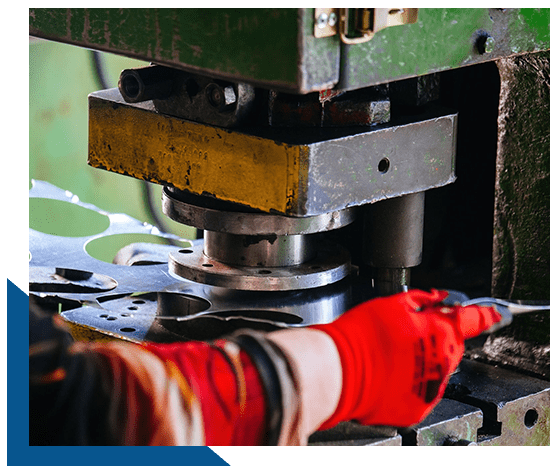
 In our experience, treating welding as a standalone service rather than an integrated part of the fabrication process often leads to costly inefficiencies. When laser cutting, forming, and welding are handled under one roof, manufacturing teams can maintain absolute control over alignment and quality standards. At SRC Metal Fabrication, our 55,000-square-foot facility is packed with state-of-the-art machinery critical to our metalworking operations, enabling us to seamlessly transform a flat sheet of metal into a finished, production-ready assembly.
Based on client results, keeping welding in-house drastically reduces lead times and supply chain friction. It ensures that the precision achieved during the initial laser cutting phase—where our TRUMPF and Mitsubishi high-speed flying-optic lasers process mild steel up to 1″, stainless steel up to 3/4″, and aluminum up to 1/2″ thick—is perfectly preserved through the final welded assembly. This integrated approach helps eliminate rework, reduce scrap, and maintain consistency across ongoing production runs.
What is MIG Welding and When Should Buyers Choose It?
MIG (Metal Inert Gas) welding is the high-speed workhorse of the metal fabrication industry. It uses a continuously fed consumable wire electrode and a shielding gas to protect the weld pool from atmospheric contamination. SRC Metal Fabrication maintains extensive MIG welding capabilities to support structural projects, complex assemblies, and continuous production runs.
This technique is highly valued for its speed and versatility. It is exceptionally well-suited for joining thicker materials and laying down long, continuous runs. Because the wire feed is automated, fabricators can lay down welds rapidly, making MIG a cost-effective choice for large structural components, heavy-duty frames, and high-volume production. Our team recommends MIG welding when project timelines are tight and deep penetration is required for maximum load-bearing strength. While the resulting weld may require post-weld grinding for a perfectly flush aesthetic, its structural reliability is unmatched.
How Do TIG and Heliarc Welding Deliver Ultimate Precision?
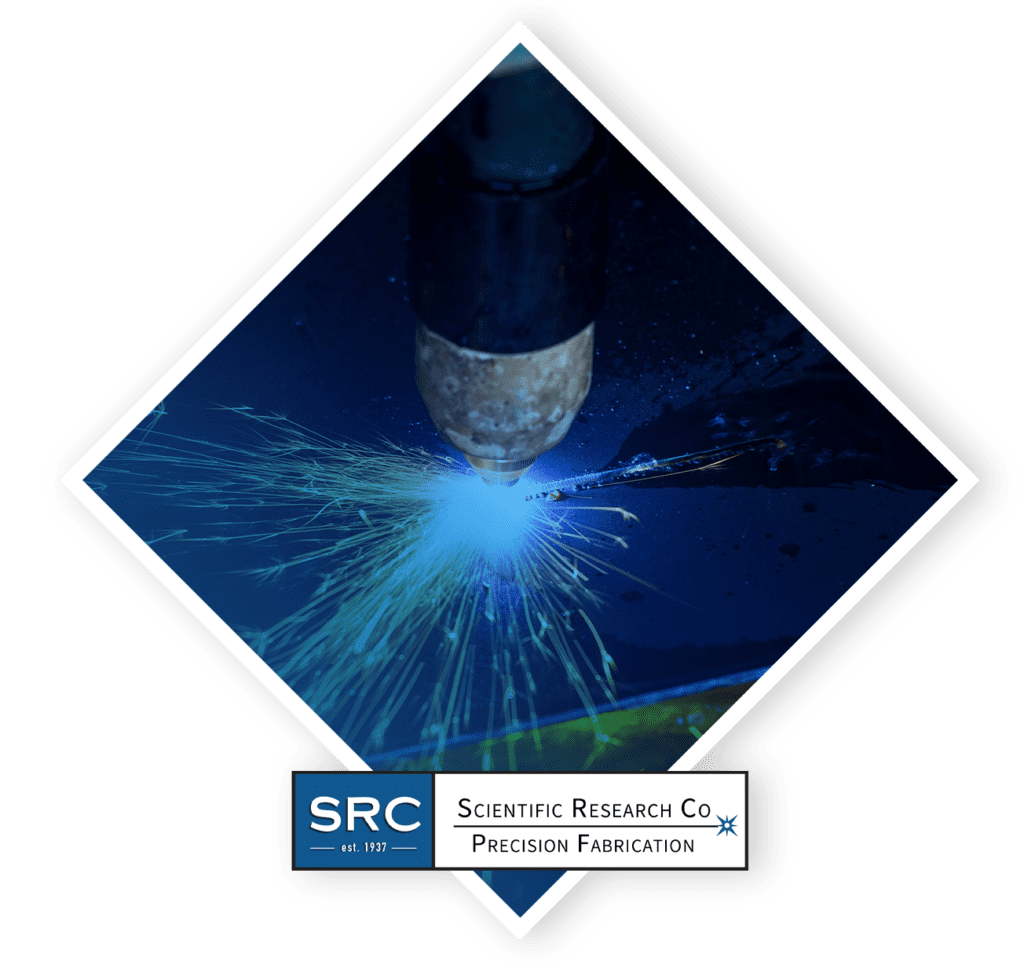
When absolute precision, clean joints, and spatter-free finishes are required, TIG (Tungsten Inert Gas), or Heliarc welding, is a superior choice. Unlike MIG, TIG uses a non-consumable tungsten electrode to create the arc, and the welder manually feeds a separate filler rod into the weld pool to join the metals. SRC is fully equipped with both TIG welding capabilities to handle your most intricate parts.
TIG welding provides the operator with extraordinary control over heat input and weld depth. This makes it the ideal technique for thin-gauge metals, intricate assemblies, and materials that are highly sensitive to heat warping, such as aluminum and thin stainless steel. We have found that TIG is the preferred method for components utilized in industries where clean, aesthetically flawless welds are mandatory. Although TIG is a slower, more labor-intensive process than MIG, the resulting weld is exceptionally strong and precise, and requires virtually no post-weld clean-up.
What Are the Benefits of Spot Welding for Sheet Metal?
Spot welding is a highly efficient resistance welding technique used primarily to join overlapping sheets of sheet metal. Instead of using a continuous arc and filler material, spot welding uses copper alloy electrodes to apply pressure and pass a localized electrical current through the metal. The electrical resistance generates enough heat to instantly melt the metal and fuse the two pieces together at a specific structural spot.
In our experience, spot welding is incredibly fast and highly repeatable, making it perfect for manufacturing custom enclosures, brackets, and lightweight chassis. Because it introduces minimal heat into the surrounding metal, the risk of warping is exceptionally low. SRC maintains robust spot welding capabilities for these exact, high-efficiency applications.
How Do You Ensure Quality and Consistency in Welded Parts?
Choosing the right welding technique is only half the battle; executing it under rigorous quality management is what guarantees long-term success. SRC Metal Fabrication is proud to be an ISO 9001:2015 certified contract manufacturer, a certification that ensures we adhere to strict quality management systems for precision metal fabrication and customer-designed metal assemblies. Our assessment phase includes comprehensive part reviews and 1st-article assessments to ensure parts perform without error.
By maintaining comprehensive shop packets and manufacturing files—including machine setup sheets, material specifications, and assembly instructions—our team ensures your specific welding requirements and tolerances are consistently met on every production run. Following the welding process, we also coordinate seamless post-production services. Whether your assemblies require powder coating through our sister company, Precision Powder Coating, or electro-mechanical assembly, packaging, metal plating, and heat treating, we deliver a truly finished product.
Why Partner with SRC Metal Fabrication Today?
Understanding the nuances of MIG, TIG or Heliarc, and spot welding empowers procurement teams to optimize their part designs for manufacturability, cost, and performance. But executing those designs flawlessly requires a trusted partner. SRC Metal Fabrication has been a premier metal fabricator serving the Pacific Northwest since 1937, supporting the Portland, Oregon, and Vancouver, Washington metro areas with uncompromising quality.
Whether your project calls for rapid MIG welding on structural steel or precise TIG welding on custom aluminum enclosures, our friendly team of fabricators is equipped with the industry experience and state-of-the-art equipment to deliver. Contact us today at 503-281-7048 or request a no-obligation quote online to discover how our full-service metal fabrication and welding solutions can drive scalable momentum for your business.
Frequently Asked Questions
What is the difference between MIG and TIG welding?
MIG welding uses a continuously fed wire to quickly join thicker materials, making it ideal for high-volume production. TIG welding uses a non-consumable tungsten electrode and manual filler rod, offering precise heat control for thin gauges and aesthetically clean welds.
Does SRC Metal Fabrication offer assembly and finishing after welding?
Yes, SRC provides full turnkey assembly. After parts are laser-cut, formed, and welded, our team can provide electro-mechanical assembly, packaging, and an array of finishing services like powder coating, metal plating, and heat treating.
What quality certifications does SRC Metal Fabrication hold?
SRC Metal Fabrication is an ISO 9001:2015 certified contract manufacturer. This certification ensures strict adherence to quality management systems for precision metal fabrication and customer-designed metal assemblies.
Posted Under: Insights
Request A Quote