 Laser cutting in metal fabrication has become the industry standard for delivering speed, precision, and repeatability. But achieving consistent, high-quality results—especially in production environments—requires more than powerful equipment. It requires a clear understanding of best practices for laser cutting in metal fabrication that support efficiency, accuracy, and long-term manufacturing success.
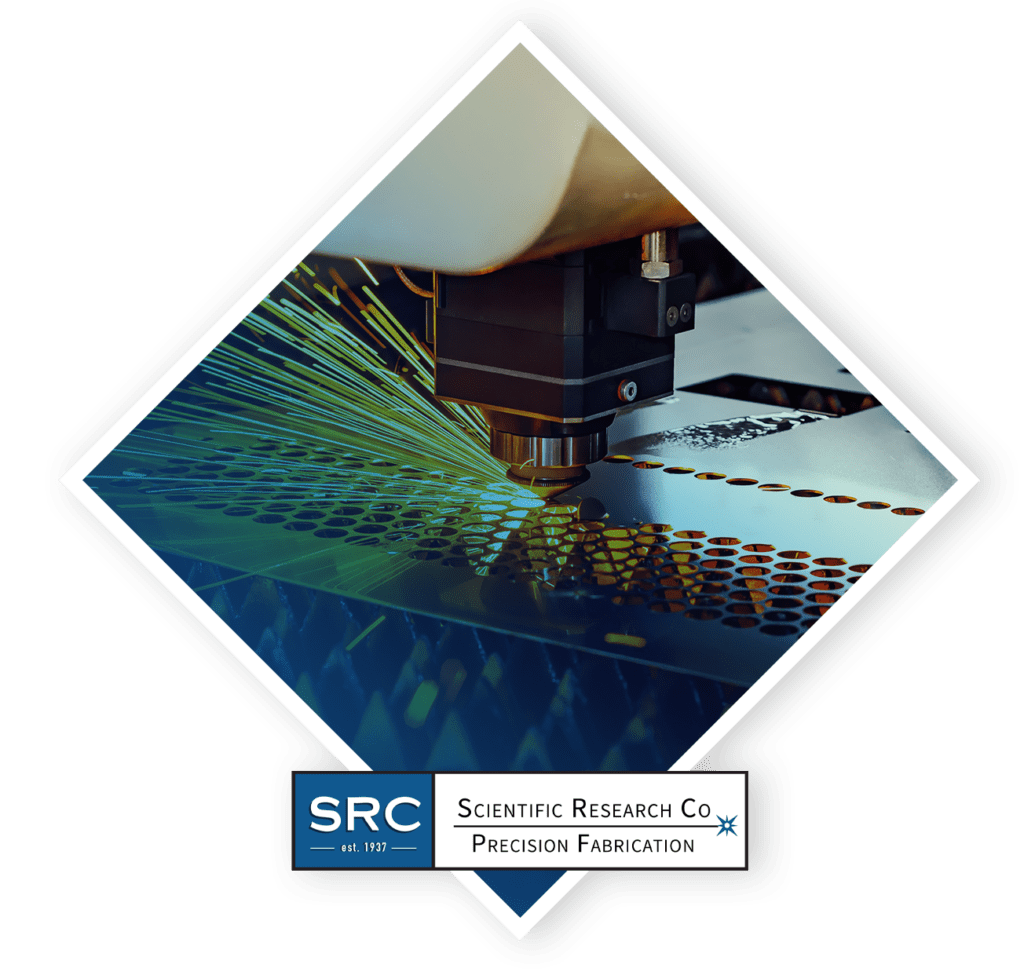
At SRC, laser cutting is approached as a critical part of an integrated fabrication process. With a fleet of TRUMPF and Mitsubishi flying-optic lasers, SRC delivers fast, accurate cutting up to 1″ steel, 3/4″ stainless, and 1/2″ aluminum—backed by intelligent nesting software and quick order fulfillment.
Start with the Right Laser Cutting Technology
One of the most important best practices for laser cutting in metal fabrication is to use equipment designed for precision and high-volume production. High-performance laser systems provide tighter tolerances, cleaner edges, and consistent repeatability across parts and production runs.
SRC’s laser cutting technology is optimized for flat-sheet metal fabrication, enabling the team to handle a wide range of materials and thicknesses while maintaining accuracy. This level of precision at the cutting stage sets the foundation for successful forming, welding, and assembly downstream.
Design Parts with Laser Cutting in Mind
Successful laser cutting starts long before the material reaches the cutting table. Part design plays a significant role in cut quality, speed, and material efficiency. Designs that account for laser-cutting constraints help reduce processing time and improve overall fabrication outcomes.
Best design practices include:
- Using consistent radii and fillets where possible
- Avoiding extremely small features near part edges
- Allowing appropriate spacing between features and cut lines
Designs optimized for laser cutting move through fabrication more efficiently and reduce the risk of quality issues later in the process.
Optimize Nesting for Material Efficiency
Nesting—the way parts are arranged on a metal sheet—has a direct impact on cost and efficiency. Intelligent nesting maximizes material use, minimizes scrap, and reduces machine runtime.
SRC uses advanced nesting software to ensure each sheet of material is used as efficiently as possible. This approach not only reduces waste but also supports faster turnaround times, making it ideal for production fabrication and ongoing orders.
Match Cutting Parameters to Material and Thickness
Another key element of best practices for laser cutting in metal fabrication is tailoring machine settings to the specific material and thickness being processed. Steel, stainless steel, and aluminum each respond differently to laser energy, requiring careful adjustment of cutting speed, power, focus, and assist gas.
Dialing in the correct parameters:
- Improves edge quality
- Reduces dross and heat-affected zones
- Maintains tight dimensional tolerances
Rather than relying on generic settings, SRC customizes cutting parameters to match each material and application, ensuring consistent, high-quality results.
Maintain Equipment and Monitor Quality
Precision laser cutting depends on well-maintained equipment. Regular calibration, optics inspection, and preventive maintenance ensure machines perform reliably over time. Monitoring the cutting process during production runs also helps identify issues early, preventing defects and downtime.
Quality checks—especially on first-article parts—verify that programs and parameters are producing parts that meet specifications before full production begins.
Understand When Laser Cutting Is the Best Solution
Laser cutting is highly versatile, but it performs best within specific applications. It excels at producing intricate geometries, tight tolerances, and clean edges in sheet metal fabrication. Understanding when laser cutting is the most effective process—and when another method may be more appropriate—is part of delivering reliable fabrication results.
Our team will work with you to discuss your project and determine whether laser cutting is the best solution, or whether another metal or small design change will yield higher quality or lower cost.
For the majority of flat-sheet metal applications, laser cutting remains the most precise and efficient option available.
Laser Cutting Built for Production Fabrication
At SRC, laser cutting is not treated as a standalone service. It is fully integrated into a broader fabrication workflow designed to support consistency, scalability, and repeatability. From mild steel up to 1″, stainless steel up to 3/4″, and aluminum up to 1/2″, SRC’s laser cutting capabilities are built to meet production-level demands.
By combining advanced equipment, intelligent software, and disciplined processes, SRC follows best practices for metal laser cutting that help customers achieve reliable results across every order.
Ready to Get Started?
If you’re looking for precision metal laser cutting backed by proven best practices and full fabrication support, SRC is ready to help.
Contact SRC today to request a bid and put your project in the hands of metal fabrication experts.
Posted Under: Insights
Request A Quote