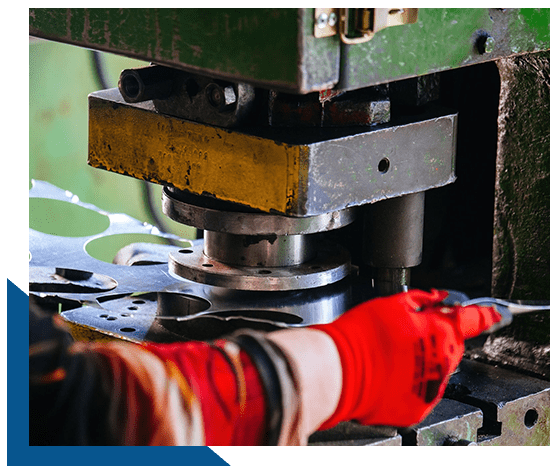
When sourcing custom components for complex assemblies, line managers and procurement specialists cannot afford dimensional errors, unexpected lead time spikes, or batch-to-batch variations. Partnering with a facility that prioritizes ISO 9001 metal fabrication ensures every stage of production—from initial laser cutting and CNC forming to final welding and assembly—is executed under a strictly monitored quality management system. In our decades of experience, adhering to rigorous quality protocols directly impacts overall product reliability, job site safety, and long-term project viability. That’s why we’re proud to say we’re ISO 9001:2015 certified.
Why does ISO 9001 matter in metal fabrication?
ISO 9001 matters in metal fabrication because it establishes a standardized Quality Management System (QMS) that enforces operational control, tight tolerance verification, full material traceability, and continuous process improvements. For OEMs and procurement leaders, partnering with an ISO 9001-certified metal fabricator guarantees consistent component repeatability, reduces costly rework, minimizes lead time variability, and protects overall supply chain integrity across every production run.
Understanding ISO 9001 in the Context of Precision Fabrication
ISO 9001 is the internationally recognized benchmark for Quality Management Systems (QMS). Published by the International Organization for Standardization, it outlines a systematic, process-driven framework designed to ensure organizations consistently meet customer specifications and regulatory requirements. However, in an industrial fabrication shop, ISO 9001 is much more than a framed wall certificate—it represents an operational mindset embedded across every shift and workstation.
Metal fabrication involves complex, multi-stage physical transformations. A single defect generated during laser cutting or punching can cascade through forming, welding, and finishing operations, compounding cost and delay. An ISO 9001 quality framework provides structured oversight through controlled documentation, standard operating procedures (SOPs), calibrated equipment checks, and continuous feedback loops. By systematically measuring performance at every milestone, a certified fabricator transforms custom manufacturing from an unpredictable trade into an exact science.
How Quality Standards Directly Impact Fabrication Results
Quality management systems directly determine the structural integrity, visual finish, and dimensional accuracy of fabricated assemblies. When choosing a manufacturing partner, understanding the practical impact of committing to ISO 9001 standards helps engineering teams evaluate the total cost of ownership rather than focusing solely on upfront piece-part pricing. In short, paying a small premium for ISO 9001 standards buys you predictable lead times, flawless fitups, and absolute supply chain peace of mind.
1. Absolute Dimensional Accuracy and Tight Tolerances
High-precision laser cutting platforms and automated press brakes require careful setup and constant monitoring. Under an ISO 9001 framework, first-article inspections are mandatory prior to initiating production runs. Technicians use calibrated measuring equipment—such as optical comparators, height gauges, and coordinate measuring machines (CMMs)—to verify critical dimensions against original CAD models and engineering drawings.
Establishing rigid inspection checkpoints before mass processing prevents compounding tolerances later in the workflow. Whether cutting thin-gauge sheet steel or bending heavy plate, standardized measurement controls ensure parts arrive at your assembly line fitting perfectly without forcing, shimming, or field modifications.
2. Repeatability Across Multi-Batch Production Runs
Delivering a flawless prototype is one accomplishment; reproducing that same part identically in fit, form, and function across ten thousand units requires rigorous operational control. ISO 9001 focuses heavily on standardizing processes to eliminate human error and equipment variation.
Our SRC Metal Fabrication team leverages intelligent nesting software alongside state-of-the-art TRUMPF lasers and CNC forming equipment. When advanced machinery operates within an ISO-controlled environment, material utilization is maximized, and parameter settings are saved for exact replication. When a customer reorders a component six months down the line, automated tool paths, material grades, and bending sequences remain preserved, guaranteeing flawless repeatability.
3. Material Traceability and Heat Lot Tracking
For critical infrastructure, architectural projects, and commercial machinery, raw material failure is not an option. ISO 9001 mandates complete traceability throughout the supply chain. Fabricators must maintain systematic tracking of Mill Test Reports (MTRs), matching physical raw stock with mill certificates, heat numbers, and alloy grades.
We have found that robust heat lot tracking provides vital protection for our partners. In the event of a raw material discrepancy from a steel mill, full batch traceability allows technicians to instantly identify affected parts, isolate stock, and implement corrective actions before components ever ship to the client.
4. Prevention of Compound Defects and Costly Rework
In an uncertified or fragmented fabrication shop, defects often pass unnoticed until final inspection—or worse, during customer assembly. ISO 9001 relies on the Plan-Do-Check-Act (PDCA) methodology to catch non-conformances at their source.
Treating operations like laser cutting, forming, and welding under one integrated roof within a structured QMS drastically reduces supply chain friction and inter-process damage. If an incorrect bend angle occurs during initial forming checks, work halts immediately, root causes are investigated, and settings are corrected. This proactive containment prevents scrap generation, avoids expensive rework, and keeps production schedules intact.
The Four Core Pillars of an ISO 9001 Quality Management System
To fully understand how ISO 9001 drives manufacturing excellence, it helps to examine the foundational pillars that govern daily shop floor operations:
- Documented Operational Control: Clear work instructions, standard operating procedures, and controlled revisions ensure every operator follows validated processes, regardless of shift or facility location.
- Calibrated Tooling and Equipment Maintenance: Precision lasers, hydraulic press brakes, and weld inspection tools undergo routine, traceable calibration and preventive maintenance to maintain baseline accuracy.
- Corrective and Preventive Action (CAPA): When errors or near-misses occur, formal CAPA protocols require root cause analysis rather than temporary fixes, thereby permanently eliminating recurring systemic vulnerabilities.
- Continuous Process Improvement: ISO 9001 mandates regular internal audits, management reviews, and key performance indicator (KPI) tracking to constantly optimize cycle times, reduce material waste, and enhance customer satisfaction.
The Business Benefits for Procurement and Line Managers
Selecting an ISO 9001 metal fabrication partner like SRC Metal Fabrication delivers tangible financial and operational advantages for supply chain executives and line managers overseeing production pipelines:
- Dimensional Tolerances: While conventional vendors often produce inconsistent fit-ups that require manual adjustments on your assembly lines, an ISO 9001 partner provides first-article verification to guarantee consistent, precise fitting straight out of the crate.
- Material Quality: Instead of unverified stock that carries the risk of premature failure or incorrect alloy usage, an ISO 9001 partner delivers full material traceability backed by verified Mill Test Reports (MTRs).
- Lead Time Reliability: While conventional suppliers often experience frequent delays due to unexpected scrap and mandatory rework cycles, an ISO 9001 partner ensures predictable manufacturing schedules driven by standardized shop workflows.
- Supply Chain Risk: Rather than risking high defect rates, production line stoppages, and warranty claims, partnering with an ISO 9001 fabricator provides documented Corrective and Preventive Action (CAPA) systems that drive down your total cost of ownership over time.
Partnering with a fully compliant fabricator drastically reduces incoming inspection costs for the client. When you trust your supplier’s internal quality controls, components can flow directly from dock to stock or straight into assembly lines without secondary validation delays.
Integrating Advanced Technology with Standardized Quality
Modern metal fabrication relies heavily on automation, but high-tech machinery is only as effective as the quality system guiding it. At SRC Metal Fabrication, our history dates back to 1937, offering us a deep appreciation for classical craftsmanship alongside modern manufacturing science. We couple decades of practical expertise with state-of-the-art automated equipment, including high-power TRUMPF and Mitsubishi fiber lasers, intelligent nesting algorithms, and high-precision CNC bending brakes.
For instance, while advanced lasers deliver exceptional cutting speeds, the true value for our clients lies in our engineering team’s optimization of nesting software under rigorous process controls. Intelligent nesting maximizes sheet utilization and reduces raw material costs, while standardized cut speeds and gas-assist selection—such as oxygen, nitrogen, or shop air, depending on the application—ensure clean, burr-free edges, eliminating the need for manual secondary deburring.
By blending technological capabilities with a process-driven quality framework, we ensure that every custom bracket, enclosure, structural frame, or complex weldment leaves our shop ready for immediate installation.
Frequently Asked Questions
What is ISO 9001 metal fabrication?
ISO 9001 metal fabrication refers to sheet metal cutting, forming, welding, and assembly processes executed within an ISO 9001 certified Quality Management System. This certification guarantees that the fabricator follows strict procedures for material control, equipment calibration, process auditing, and continuous quality improvement.
How does ISO 9001 certification affect part tolerances?
While ISO 9001 itself does not specify exact physical tolerances, it establishes mandatory inspection protocols, equipment calibration routines, and first-article verification processes. These controls ensure the fabricator consistently meets or exceeds the specific engineering tolerances defined on your project drawings.
Why is material traceability important in metal fabrication?
Material traceability ensures that raw metal stock can be traced back to its original mill batch through Mill Test Reports (MTRs). This guarantees structural integrity, verifies chemical composition, and ensures compliance with industry regulations, preventing unverified or sub-standard alloys from entering critical production runs.
Can an ISO 9001 fabricator help lower overall production costs?
Yes. By preventing defects, eliminating scrap, optimizing material usage, and streamlining workflows under standard operating procedures, an ISO 9001 fabricator reduces scrap and rework costs. This lowers the total cost of ownership and prevents assembly line downtime for procurement partners.
Partner with Precision Metal Fabrication Experts
Achieving outstanding fabrication results requires more than just powerful lasers and heavy-duty machinery—it demands an unwavering commitment to quality standards, process discipline, and collaborative problem-solving. Whether you are looking to simplify your supply chain, reduce lead times, or ensure flawless part-to-part repeatability across complex production runs, working with an experienced partner makes all the difference.
Discover the difference at SRC. Create parts engineered for precision—with experts who know metal fabrication. Contact SRC today to request a bid and put your project in the hands of metal fabrication experts.
Posted Under: Insights
Request A Quote